


Drum brakes 65
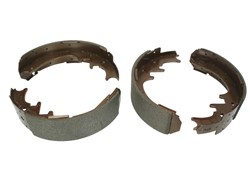
LPR
Brake shoe set LPR01125
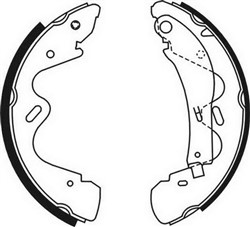
ABE
Brake shoe set C01054ABE
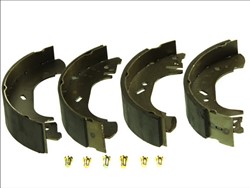
ABE
Brake shoe set C0G048ABE
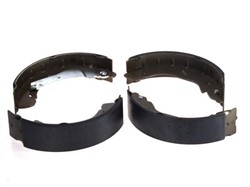
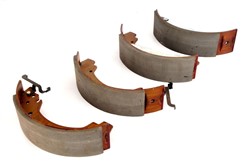
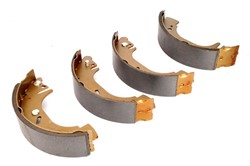
LPR
Brake shoe set LPR07790
LPR
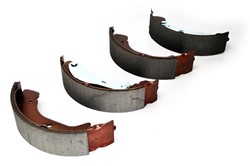
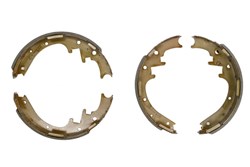
Brake shoe set LPR08440
BREMBO
Brake shoe set S 24 554
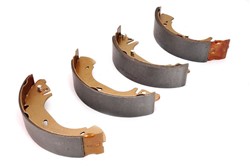
FERODO
Brake shoe set FSB618

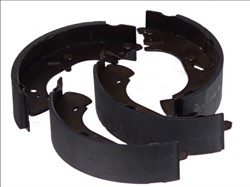

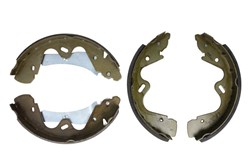
DELPHI
Brake shoe set LS2019
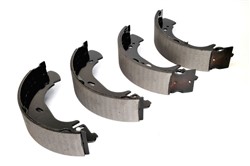
TEXTAR
Brake shoe set 91054500
Drum brake - what is it?
Drum brakes work by using hydraulic pressure to force brake shoes against the inside of a rotating brake drum, which slows or stops the vehicle:
1. The driver presses the brake pedal
2. The brake booster increases the power and converts it to hydraulic pressure
3. The pressure travels through brake fluid-filled lines to the wheel cylinders
4. The pistons in the wheel cylinders are pushed by the pressure
5. The pistons press the brake shoes against the brake drum's inner surface
6. The friction created by the brake shoes on the rotating drum slows the wheels
7. When the brake pedal is released, the return springs pull the brake shoes back into place
Drum brakes are typically found on the rear wheels of vehicles, and are often used for parking brakes because they're easier to add than to disc brakes
Some advantages of drum brakes include:
• Lower production costs: Drum brakes are less expensive to produce.
• Less heat generation: Drum brakes produce less heat than disc brakes.
• Self-energizing action: Drum brakes require less input force.
• Corrosion resistance: Drum brakes are more resistant to corrosion than disc brakes.
However, drum brakes can be more complex and time-consuming to service than disc brakes. They also have some disadvantages, including:
• Brake shoes can overheat and become glazed.
• Excessive brake drum heating can cause the brake fluid to vaporize.
Drum brakes can be adjusted and repaired by using a drum brake adjuster, also known as a star wheel adjuster, to change the distance between the brake shoe and the drum. Here are some steps you can take to adjust drum brakes:
1. Inspect
Before adjusting, inspect the drum brakes. You can check for scoring on the drum braking surface, and measure the inside diameter of the brake drum at a few points around the circumference.
2. Access the adjuster
Locate the adjuster behind the back panel on the drum brake. You can pop out the access plug and keep it for later.
3. Loosen the adjuster
If the brakes are too tight, you can loosen the star wheel adjuster with a brake spoon.
4. Adjust the distance
Rotate the star on the adjuster to change the distance between the brake shoe and the drum.
5. Test
Test the brake using the handbrake. If the brake doesn't feel right, adjust the lever again until it feels optimal.
You can also replace drum brakes, which involves removing the brake drum, brake shoes, and parking brake cable retainer clip. You can then clean and reinstall the components, install a new brake drum, and put the wheel and tire back on.
Signs that your drum brakes may need replacing include: Noises from the vehicle, Loose parking brakes, Difficulty stopping the vehicle, and Brake pedal vibration.
Here are some signs that your drum brakes may be failing:
• Brake pedal feel
The brake pedal may vibrate, shudder, or pulsate when you step on it. This can indicate that the brake shoes are worn down.
• Loose parking brake
If the brake shoes are worn or dusty, they may not be able to hold the weight of the vehicle when the brake is engaged.
• Grinding noise
A grinding sound usually indicates that the brake pads are worn out and the rotors and drums may be damaged.
• Sinking brake pedal
A brake pedal that doesn't return to its original position after being released is a sign of a bad brake master cylinder.
• Brake system overheating
Drum brakes have poor heat dissipation due to their design, which can affect braking performance.
• Burning smell
A burning smell from your wheels and brakes indicates that your brakes have overheated.
If you notice any of these signs, you should get your brakes checked by a professional as soon as possible.