
Car Air Conditioning Not Working? Faults, Regas & Repairs
Learn how car air conditioning works, common AC faults, refrigerant types and maintenance tips. Find compatible air-con parts for your vehicle on IC24.
Car Air Conditioning: How It Works, Common Problems and Maintenance Tips
Car air conditioning is not only useful during a summer heatwave. A properly functioning air-con system also helps remove moisture from the cabin, demist the windscreen and make driving more comfortable throughout the year. This guide explains how automotive air conditioning works, which parts it contains and what to check when the system stops blowing cold air.
Find Air Conditioning Parts That Fit Your Car
Air-conditioning parts must match the exact vehicle specification. Compressors, condensers, receiver driers, expansion valves, sensors and cabin filters can vary between engines, model years and equipment versions.
Use Select Your Vehicle to filter compatible parts by make, model, engine and production year. You can also use your VIN when requesting fitment confirmation, or ask the IC24 AI Assistant to help identify suitable parts.
What Does Car Air Conditioning Do?
Most drivers think of air conditioning as a way to cool the cabin on a hot day. That is its most obvious function, but it is not the only one.
An effective AC system also removes moisture from the air entering the passenger compartment. This makes it useful in autumn and winter, when damp air can cause the windows to mist up. Directing conditioned air towards the windscreen can help clear condensation more quickly and improve visibility.
Air conditioning can therefore support both comfort and safety. A cooler, less humid cabin helps the driver stay focused, while clearer windows make it easier to see the road and surrounding traffic.
How Does Car Air Conditioning Work?
A car air-conditioning system operates as a closed circuit. Refrigerant circulates through the system and changes pressure and state as it moves between the compressor, condenser, expansion valve and evaporator.
The process does not create cold air directly. Instead, the system removes heat from the air entering the cabin and releases that heat outside the vehicle.
1. Compression
The compressor draws in low-pressure refrigerant gas and compresses it. This increases both its pressure and temperature before it flows towards the condenser.
2. Condensation
The condenser releases heat to the outside air. As the refrigerant cools, it changes from a high-pressure gas into a high-pressure liquid.
3. Pressure Reduction
The expansion valve reduces the refrigerant pressure and regulates how much refrigerant enters the evaporator.
4. Evaporation and Cooling
Inside the evaporator, the low-pressure refrigerant absorbs heat from the surrounding air. The blower then pushes cooled and dehumidified air into the cabin.
Important: refrigerant circulates in a closed system. If cooling performance drops noticeably, the correct approach is to inspect the system for leaks or faulty components rather than repeatedly topping it up without diagnosis.
What Parts Make Up a Car Air-Conditioning System?
Automotive air conditioning is a complete system rather than a single component. Several parts work together to control refrigerant pressure, remove heat and direct conditioned air into the cabin.
| AC component | What it does | Possible signs of a fault |
|---|---|---|
| AC compressor | Pressurises refrigerant and keeps it circulating through the system. | Poor cooling, unusual noises, a seized pulley or intermittent operation. |
| Condenser | Releases heat outside the car and converts high-pressure refrigerant gas into liquid. | Weak cooling, visible damage, corrosion or leakage after impact from road debris. |
| Receiver drier or accumulator | Helps manage refrigerant flow while absorbing moisture and filtering contaminants from the refrigerant circuit. | Reduced system performance, contamination or damage following a major system leak. |
| Expansion valve or orifice tube | Reduces pressure and regulates the amount of refrigerant entering the evaporator. | Inconsistent cooling, icing or poor performance at certain engine speeds. |
| Evaporator | Absorbs heat from the air before it enters the passenger compartment. | Weak cooling, unpleasant smells, water inside the cabin or a difficult-to-locate leak. |
| Cabin blower fan | Pushes air through the ventilation system and into the cabin. | Weak airflow, no airflow, rattling or operation at only certain fan speeds. |
| Cabin filter | Filters dust, pollen and other airborne particles before air enters the cabin. | Reduced airflow, misted windows or an unpleasant smell from the vents. |
| AC pipes, seals and sensors | Carry refrigerant and monitor pressure and temperature throughout the system. | Refrigerant leakage, intermittent cooling or system shutdown. |
AC Compressor
The compressor is the heart of the air-conditioning system. It draws in refrigerant gas at low pressure, compresses it and sends it towards the condenser. Depending on the vehicle, the compressor may be belt-driven, electrically controlled or fully electric.
Compressor damage can be expensive because internal failure may spread contamination through the system. If a compressor has failed, replacing the compressor alone may not be enough. The circuit should be inspected properly and contaminated components may also need attention.
Condenser
The condenser is usually mounted near the front of the vehicle, close to the engine radiator. Its job is to release heat into the outside air. Because of its location, it can be damaged by road debris, corrosion or impact.
Receiver Drier or Accumulator
The receiver drier or accumulator helps protect the system from moisture and contamination. The exact component and its position vary by AC system design. Some modern condensers have an integrated receiver drier.
Expansion Valve
The expansion valve controls refrigerant entering the evaporator. It reduces the pressure of the liquid refrigerant, allowing the evaporator to absorb heat efficiently.
Evaporator
The evaporator is normally positioned behind the dashboard. Air passes across its cold surface before flowing through the vents into the cabin. Moisture condenses on the evaporator and should drain away underneath the vehicle through a drainage outlet.
Common Car Air-Conditioning Symbols
The exact dashboard layout varies between vehicles, but most cars use a similar set of symbols and controls.
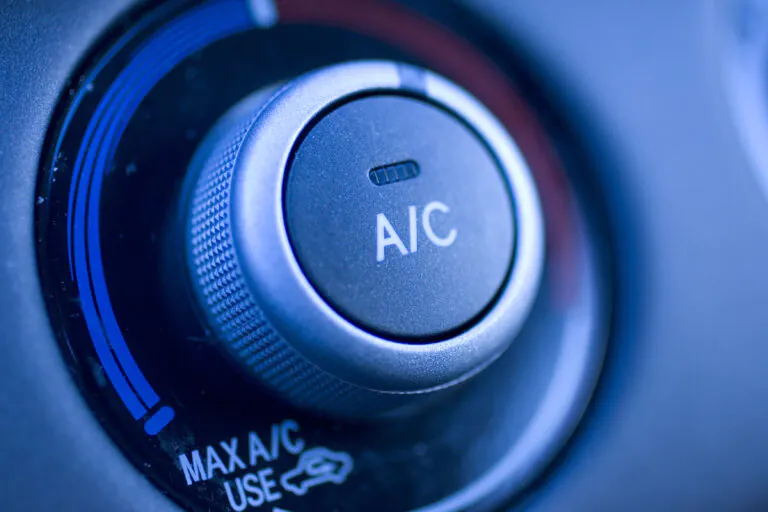
A/C or AC
Switches the air-conditioning function on or off. On many vehicles, the system can still be used with warm air to dehumidify the cabin and demist the windows.
AUTO
Allows automatic climate control to manage fan speed, air direction and temperature according to the selected setting.
Recirculation
Usually shown as a car outline with a curved arrow. It recirculates cabin air rather than drawing in air from outside. This can help cool the cabin more quickly, but it should not be left on indefinitely if the windows begin to mist.
Windscreen Demist
Directs airflow towards the windscreen. On many cars, selecting this mode automatically activates the AC system to remove moisture more effectively.
DUAL or SYNC
Controls temperature zones in the cabin. DUAL allows separate settings for the driver and passenger, while SYNC links them together.
Fan Symbol
Adjusts airflow strength. Weak airflow even at a high setting may indicate a blocked cabin filter, blower fault or ventilation issue.
Which Refrigerant Does My Car Use?
The correct refrigerant depends on the vehicle, its age and the design of the air-conditioning system. The refrigerant type is normally shown on a label under the bonnet or in the vehicle documentation.
| Refrigerant | Where it is commonly found | What to know |
|---|---|---|
| R-134a | Many older vehicles, especially cars produced before the widespread adoption of newer low-GWP refrigerants. | Widely used historically, but phased out for new EU-market passenger vehicles because of its high global-warming potential. |
| R-1234yf | Many newer passenger cars and light commercial vehicles. | A lower-GWP refrigerant that became the main replacement for R-134a in new vehicles. It requires suitable service equipment and careful handling. |
| R-744 | Selected vehicles using CO2-based air-conditioning systems. | Uses carbon dioxide as the refrigerant. The operating pressures and servicing requirements differ significantly from conventional systems. |
Do not mix refrigerants. The correct refrigerant type and fill quantity must match the vehicle specification. Refrigerant recovery, leak testing and recharge work should be carried out by a properly equipped and appropriately qualified professional.
Why Is My Car Air Conditioning Not Working?
If your air conditioning is not blowing cold air, the first step is to identify the cause. Simply adding refrigerant may temporarily hide the problem without fixing it.
1. Refrigerant Leak
A refrigerant leak is one of the most common causes of poor AC performance. It may come from damaged seals, pipes, service ports, the condenser, evaporator or compressor.
Because refrigerant can escape as a gas, the leak may not be immediately visible. A professional workshop may use pressure testing, an electronic leak detector, suitable tracing methods or other diagnostic procedures to locate it.
2. Damaged Condenser
The condenser sits near the front of the vehicle and is exposed to road debris, dirt and corrosion. A damaged condenser may leak refrigerant or lose efficiency, causing weak cooling.
3. Compressor Fault
A faulty compressor may cause a loss of cooling, unusual noises or intermittent operation. Depending on the system design, faults may involve the compressor itself, its clutch, pulley, electrical control valve or power supply.
4. Blocked Cabin Filter
A clogged cabin filter can reduce airflow even if the air-conditioning circuit itself is working correctly. If air from the vents feels weak, inspect the cabin filter as part of routine servicing.
5. Blower Fan or Resistor Fault
If the fan works only at certain speeds, makes unusual noises or stops entirely, the cause may be the blower motor, resistor, control module or wiring.
6. Expansion Valve or Sensor Issue
A faulty expansion valve, pressure sensor or temperature sensor can disrupt refrigerant flow or cause the system to shut down as a protective measure.
7. Blocked Evaporator Drain
A small amount of water dripping underneath the vehicle after using the air conditioning is normally expected. It is condensation draining away from the evaporator.
Water inside the cabin is different. It may indicate a blocked evaporator drain, a drainage problem or another fault that should be investigated.
8. Unpleasant Smell from the Vents
A musty smell may result from moisture, contamination around the evaporator, a dirty cabin filter or debris inside the ventilation system. Replacing the cabin filter and cleaning the ventilation system may help, but persistent odours should be inspected properly.
How to Look After Your Car Air Conditioning
Regular checks can reduce the risk of expensive faults and help keep the cabin comfortable throughout the year.
- Use the AC system regularly. Running it periodically, including outside summer, helps you notice problems early and makes demisting easier in damp weather.
- Replace the cabin filter according to the service schedule. A clogged filter can reduce airflow and contribute to unpleasant smells.
- Do not ignore weak cooling. A noticeable drop in performance may indicate a leak, blocked condenser or component fault.
- Pay attention to unusual noises. Grinding, squealing, rattling or clicking when the AC is switched on should be investigated.
- Keep the front of the car clear. Dirt and debris around the condenser can reduce heat dissipation.
- Check for water in the cabin. Condensation underneath the car is usually normal, but damp carpets or water inside the cabin require attention.
- Use the correct refrigerant. Never mix refrigerants or recharge the system without confirming the vehicle specification.
Does Car Air Conditioning Need a Regas?
You may hear air-conditioning servicing described as an AC recharge, air-con regas or refrigerant refill. These terms usually refer to recovering the refrigerant, checking the system, creating a vacuum and refilling it with the correct amount of refrigerant and compressor oil where required.
However, weak cooling should not automatically be treated as a refill-only job. The system should be checked for leaks and faults first. If refrigerant has escaped, the cause should be identified rather than ignored.
Can I Repair Car Air Conditioning Myself?
Some basic tasks are suitable for a careful vehicle owner. For example, you may be able to replace a cabin filter, remove leaves from accessible ventilation areas or inspect the condenser visually for obvious damage.
Work involving refrigerant recovery, pressure testing, vacuum creation, refilling or opening the sealed circuit should be left to a suitably qualified professional with the correct equipment.
How to Find the Correct AC Parts for Your Car
Compatibility matters. Two cars with the same badge and body shape may use different compressors, condensers or cabin filters depending on the engine, year, equipment version and air-conditioning system.
1. Select Your Vehicle
Use the IC24 vehicle selector to enter your make, model, engine and production year. This helps narrow down the catalogue to compatible parts.
2. Use Your VIN for More Accurate Identification
Your VIN is the 17-character vehicle identification number. It can help confirm the exact vehicle configuration when similar versions use different AC components.
3. Ask the IC24 AI Assistant
If you are unsure whether you need a compressor, condenser, cabin filter, receiver drier or another component, use the AI Assistant to help identify the relevant category and suitable parts for your vehicle.
Need an Air-Conditioning Part for Your Car?
Select your vehicle, use your VIN when confirming fitment or ask the IC24 AI Assistant to help find suitable air-conditioning parts.
Car Air Conditioning: Summary
Car air conditioning is useful in every season. It cools the cabin during warm weather, removes moisture from the air and helps clear misted windows. The system depends on several components working together, including the compressor, condenser, receiver drier, expansion valve, evaporator, blower fan and cabin filter.
If your AC stops blowing cold air, produces an unpleasant smell, becomes noisy or leaves water inside the cabin, do not ignore it. The correct solution is to diagnose the cause and replace any faulty components with parts matched to the exact vehicle.
FAQ: Car Air Conditioning
How does car air conditioning work?
Refrigerant circulates through a closed system. The compressor increases its pressure, the condenser releases heat, the expansion valve reduces the pressure and the evaporator absorbs heat from the air entering the cabin.
Why is my car air-con not blowing cold air?
Possible causes include a refrigerant leak, damaged condenser, faulty compressor, blocked cabin filter, blower fan problem, sensor fault or expansion valve issue.
Is water dripping underneath my car after using AC normal?
Usually, yes. The AC system removes moisture from the air, and the resulting condensation normally drains underneath the vehicle. Water inside the cabin is not normal and should be investigated.
Why does my air conditioning smell musty?
A musty smell may come from a dirty cabin filter, moisture or contamination around the evaporator, or debris inside the ventilation system.
Can I use air conditioning during winter?
Yes. Air conditioning is useful during damp and cold weather because it helps remove moisture from the cabin and demist the windscreen.
Does my car use R-134a or R-1234yf refrigerant?
The correct refrigerant depends on the vehicle and its AC system. Check the label under the bonnet or the vehicle documentation. Do not mix refrigerants.
What is an air-con regas?
An air-con regas usually involves recovering the existing refrigerant, checking the system, creating a vacuum and refilling it with the correct quantity of the specified refrigerant. Weak cooling should still be investigated for leaks or faults.
How often should I replace the cabin filter?
Follow the vehicle manufacturer’s service schedule. Replace it sooner if airflow becomes weak, the windows mist up easily or an unpleasant smell comes from the vents.
How can I find compatible AC parts on IC24?
Use Select Your Vehicle, confirm the exact configuration using your VIN where necessary, or ask the IC24 AI Assistant for help identifying suitable parts.