
White Smoke from Exhaust: What Does It Mean?
A little white vapour on a cold morning is often normal. Thick smoke that continues when the engine is warm, however, can indicate anything from an injection fault to coolant entering the cylinders. Here is how to tell the difference.
Find cooling and engine parts for your car
Once the fault has been diagnosed, select your vehicle to browse compatible cooling-system, sealing and engine components without guessing the fitment.
White exhaust emissions are not automatically a sign of engine damage. The important clues are when they appear, how long they last, how dense they are and whether the car has other symptoms.
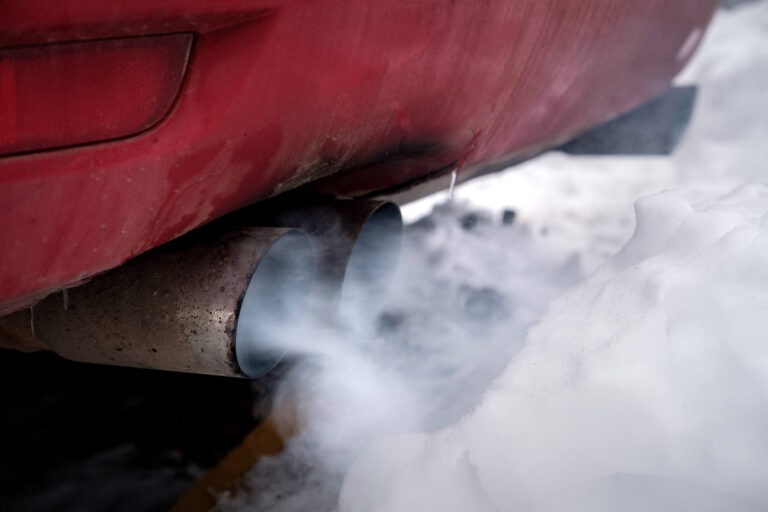
Drivers generally cannot see normal exhaust gases clearly, yet the exhaust contains water vapour as a natural product of combustion. When that vapour meets cooler outside air, tiny water droplets can form a visible white cloud. On a cold day, this can look much like smoke even when the engine is healthy.
Persistent, heavy white exhaust is a different matter. It may point to coolant reaching the combustion chamber, but fuel-combustion faults—particularly on diesel engines—can create a similar appearance. Colour alone is not enough to identify the faulty part.
Is white smoke from the exhaust normal?
The fastest way to judge what you are seeing is to distinguish short-lived condensation from abnormal emissions that continue after the engine and exhaust have warmed up.

A little water dripping from the tailpipe after a cold start can be normal too. However, condensation should not be used to explain ongoing clouds from a hot engine or repeated loss of coolant.
What causes thick white smoke from the exhaust?
One of the more serious explanations is coolant entering the cylinders and leaving the exhaust as steam. Coolant should circulate within the engine's cooling passages, not mix with the air–fuel charge. A breach between these areas can produce visible white emissions.
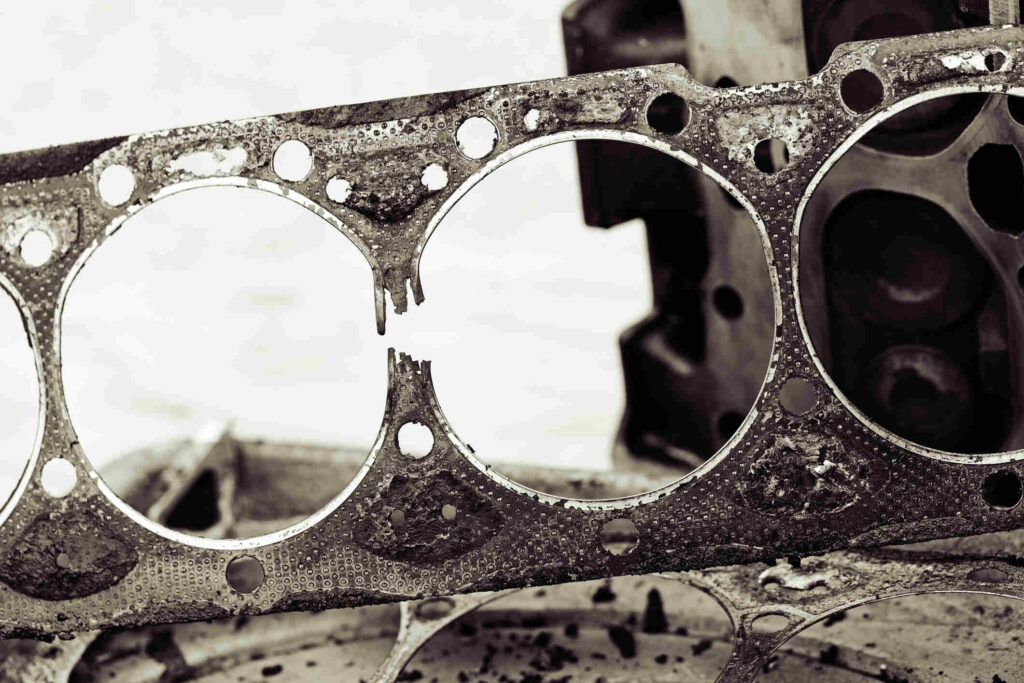
Blown cylinder head gasket
The gasket seals the joint between the cylinder head and engine block. If the seal fails between a coolant passage and a cylinder, coolant can enter combustion.
Cracked or warped cylinder head
Overheating or other damage can compromise the head or its sealing surface, sometimes allowing coolant to reach the combustion chamber.
Engine block or liner damage
Less common but potentially severe structural faults can also create a path for coolant. These require professional assessment.
Other internal coolant leaks
On certain engines, components such as a coolant-cooled EGR cooler may leak into the exhaust or intake route, creating white steam without a failed head gasket.
Warning signs to take seriously
Thick white smoke combined with a falling coolant level, overheating, rough running, unexplained coolant pressurisation or sweet-smelling exhaust calls for prompt inspection. A milky-looking oil deposit may support concerns about contamination, but a little residue beneath the filler cap can also result from short journeys and condensation.
White smoke from a diesel exhaust
A diesel engine can emit white or whitish-grey smoke when fuel fails to burn properly. This is particularly relevant when the smoke occurs immediately after starting, the engine struggles to start or it idles roughly. Possible causes include worn injectors, incorrect injection timing, poor compression, faulty glow plugs or glow-plug control problems.
Diesels can also suffer genuine coolant leaks through a head gasket, cylinder head or certain EGR-cooler designs. For that reason, white smoke from a diesel does not automatically mean a blown head gasket, and a technician should use the other symptoms and diagnostic tests to determine the cause.
Does a DPF cause white smoke?
Diesel particulate filter regeneration can change exhaust temperature, smell and engine behaviour, but repeated dense white smoke should not be dismissed as normal regeneration. Persistent smoke deserves diagnosis of the injection, combustion and emissions systems.
White smoke from a petrol exhaust
In a petrol car, a thin white plume immediately after startup is often just condensed water vapour. If thick white smoke continues once fully warm—particularly with coolant loss or overheating—an internal coolant leak becomes a more important possibility.
Running problems, sensor faults and fuelling issues can also affect exhaust appearance. An accurate diagnosis considers how the vehicle behaves, rather than assuming that a particular colour always corresponds to one component.
Why does white smoke appear when starting a cold engine?
Water is produced during normal combustion and may collect in a cooling exhaust system. On startup, exhaust heat begins to evaporate this moisture; the vapour can condense again in the cold surrounding air, making it clearly visible behind the vehicle.
This effect is not restricted to petrol or LPG cars. Diesel, petrol and LPG engines can all produce water vapour. Cold and humid weather, short journeys and a cool exhaust system can make the plume more noticeable.
If the cloud fades as the car warms up and the engine otherwise runs normally, there is usually little reason for concern. If the smoke remains thick or the vehicle starts badly, misfires or loses coolant, arrange a closer inspection.
White exhaust smoke: symptoms and likely explanations
Use the pattern of symptoms to decide how urgently to act. These are possible explanations—not a substitute for workshop diagnosis.
| What you notice | Possible explanation | Recommended action |
|---|---|---|
| Light white vapour on a cold morning; clears after warming | Normal condensation in the exhaust | Monitor; no repair if it disappears and there are no other symptoms |
| Thick white smoke after the engine is hot; coolant level falling | Coolant entering combustion or exhaust pathway | Stop driving if severe; arrange cooling-system and engine checks |
| White smoke on diesel cold starts, hard starting or rough idle | Glow plugs, injection, timing or compression fault | Ask for diesel fault-code, injector and cold-start diagnostics |
| White smoke with temperature warning or overheating | Cooling-system or internal engine fault | Pull over safely, switch off and request assistance |
| White-to-blue haze with noticeable engine oil loss | Possible oil burning rather than water vapour | Check oil level and have turbocharger, valve seals or engine wear assessed |
What should you check when your car emits white smoke?
Start with simple observations; do not dismantle components or open a pressurised cooling system at the roadside.
- Notice when it happens. Cold start, warm idle, acceleration and steady driving provide different clues.
- Watch the temperature gauge. Rising temperature or an overheating warning is an urgent reason to stop.
- Check coolant when the engine is completely cold. Repeated drops in the reservoir level warrant investigation, even if no external leak is visible.
- Check engine oil appropriately. Look for an abnormal level or signs of contamination, remembering that filler-cap deposits alone do not prove a head gasket failure.
- Note other symptoms. Rough idle, misfires, hard starting, warning lights, loss of power and unusual odours all help the garage diagnose the problem.
- Ask for targeted testing. Depending on symptoms, a mechanic may perform a cooling-system pressure test, combustion-gas test, compression or leak-down test, scan for fault codes or inspect diesel injection.
Never open the coolant cap on a hot engine
The cooling system may be pressurised, and escaping coolant can cause serious burns. Let the engine cool completely and follow the vehicle handbook before checking its level.
What do black, blue and grey exhaust smoke mean?
The colour of visible exhaust provides a useful starting point, although lighting and viewing conditions can make shades difficult to distinguish.
Black smoke
Often suggests excessive soot from an overly rich mixture or incomplete combustion. On diesel engines, injectors, air supply, turbo/boost leaks and EGR-related faults may contribute.
Blue smoke
Frequently indicates burning engine oil. Possible routes include worn valve-stem seals, piston rings, crankcase ventilation faults or turbocharger oil leaks.
Grey smoke
Can have several causes, including oil burning or combustion and fuelling faults. Proper diagnostics are needed to distinguish them.
White smoke
May be harmless condensed water vapour, steam from an internal coolant leak or poorly burned fuel in some engines.
Can you drive with white smoke coming from the exhaust?
If it is only a brief, thin plume on a cold start that disappears once warm—and the vehicle shows no other fault symptoms—driving is normally fine. Persistent thick smoke is not something to ignore while hoping that it will clear by itself.
If white smoke comes with overheating, rapid coolant loss, severe misfiring or a temperature warning, pull over somewhere safe, turn off the engine and arrange recovery. Driving on can worsen engine damage or leave you stranded.
For smoke that persists without an obvious overheating warning, arrange prompt professional inspection and ask the garage whether the vehicle should be driven there or recovered. The correct action depends on the symptoms and severity.
How is persistent white exhaust smoke fixed?
The repair must address the proven cause. A faulty injector or glow-plug circuit calls for different work from a leaking EGR cooler, blown head gasket or damaged cylinder head. Mechanics may need to check for overheating damage and verify that the cooling system is functioning correctly before the car returns to service.
If replacement parts are required, confirm the exact vehicle configuration—including engine code, production variant and relevant specifications—before ordering. Cylinder head gaskets, for example, can differ in thickness and design even within the same model range.
At IC24.UK, you can search for compatible engine and cooling components using your vehicle details. Correct diagnosis should come first; replacing a head gasket on the basis of smoke colour alone risks unnecessary cost.
In summary: when is white exhaust smoke a problem?
A small cloud of white vapour immediately after starting a cold car is often normal condensation. Thick emissions that continue from a warm engine, particularly with coolant loss, overheating or poor running, deserve prompt attention.
Possible causes range from diesel injection and cold-start issues to leaking coolant pathways and serious sealing faults. Do not diagnose a head gasket from exhaust colour alone: observe the symptoms, keep safety first and have the underlying cause tested.
Need engine or cooling-system parts for your car?
Once you know what needs replacing, select your vehicle to browse compatible components—or use the AI Parts Finder for assistance with part identification.
FAQ: White smoke from the exhaust
Why is white smoke coming from my exhaust?
Brief white vapour on a cold start is often normal condensation. Persistent thick smoke can indicate coolant entering the combustion chamber or, in some diesel engines, fuel that is not burning correctly.
Is white smoke on a cold start normal?
Yes, a light cloud that fades as the exhaust warms is common, particularly in cold or damp weather. Ongoing smoke, coolant loss or poor running calls for further investigation.
Does white smoke always mean a blown head gasket?
No. A damaged head gasket is only one possible explanation. Condensation, diesel injection faults, glow-plug problems and other coolant leaks can produce similar-looking emissions. Proper testing is needed.
Why does my diesel blow white smoke when starting?
Cold-start white smoke may result from normal condensation or incomplete fuel combustion. Faulty glow plugs, injectors, poor compression or injection-timing problems are possibilities if the engine is hard to start or runs unevenly.
Can low coolant cause white exhaust smoke?
Low coolant by itself does not produce white exhaust smoke. However, coolant leaking internally into the combustion or exhaust pathway can cause both a falling coolant level and persistent white steam.
Can I keep driving if my car produces white smoke?
Brief condensation is generally harmless. If smoke persists—especially with overheating, significant coolant loss, warning lights or misfiring—stop driving and seek professional advice. Severe symptoms call for recovery.
What is the difference between white, black and blue exhaust smoke?
White smoke may be harmless water vapour, steam from coolant or poorly burned diesel fuel. Black smoke often points to soot from incomplete combustion, while blue smoke usually indicates that engine oil is being burned.