


Disc brakes 5
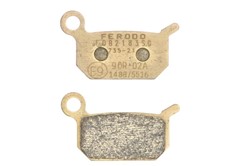
FERODO
Brake pads FDB2183SG FERODO sinter, intended use offroad fits KTM
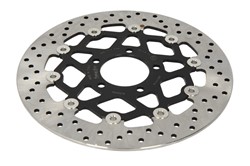
BREMBO
Brake disc 78B40842 Front floating BREMBO 300/69/5mm/91mm
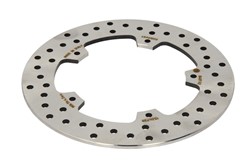
BREMBO
Brake disc 68B407F2 Rear fixed BREMBO 220/119,5/5mm/136mm

FERODO
Brake disc FMD0475RX Front floating FERODO 282/132/5mm/150mm
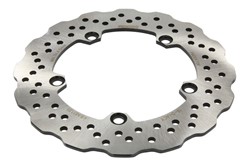
FERODO
Brake disc FMD0470R Rear fixed FERODO 245/132/5mm/150mm
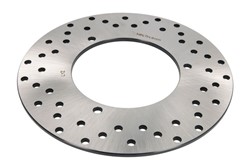
RMS
Brake disc RMS 22 516 0300 Rear fixed RMS 230/116/5mm
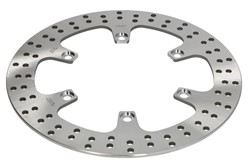
TRW
Brake disc MST206 Front fixed TRW 296/144/5mm/166mm
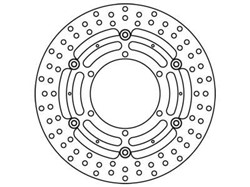
TRW
Brake disc MSW200 Front floating TRW 305/118/5mm/134mm
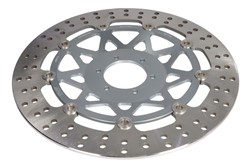
TRW
Brake disc MSW212 Front floating TRW 296/58/5mm/74mm
TRW
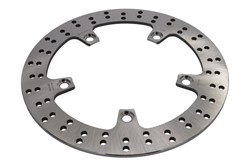
Brake disc MST372 Rear fixed TRW 265/136,5/5mm/160mm

TRW
Brake disc MST386 Rear fixed TRW 240/120,5/5mm/141mm
BREMBO
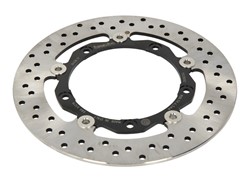
Brake disc 78B40817 Front floating BREMBO 267/132/5mm/150mm
BREMBO
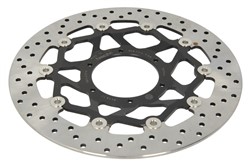
Brake disc 78B40877 Front floating BREMBO 320/94/5mm/110mm
BREMBO
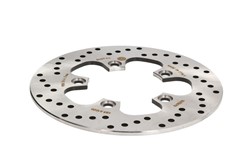
Brake disc 68B40744 Rear fixed BREMBO 220/89/5mm/110mm

FERODO
Brake disc FMD0111RX Front floating FERODO 320/64/5mm/80mm
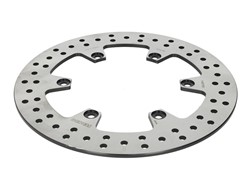
FERODO
Brake disc FMD0155R Rear fixed FERODO 267/132/5mm/150mm
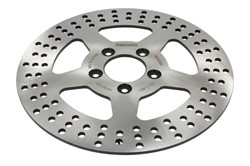
FERODO
Brake disc FMD0266R Front fixed FERODO 292/56,3/5mm/82,5mm

FERODO
Brake disc FMD0281RX Front floating FERODO 320/132/5mm/150mm
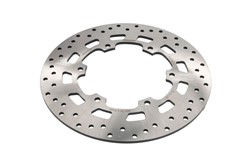
FERODO
Brake disc FMD0424R Front fixed FERODO 270/128,3/5mm/146,2mm

FERODO
Brake disc FMD0431R Front fixed FERODO 300/172,5/5mm/172,5mm
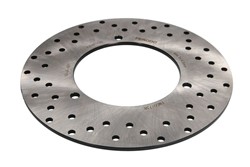
FERODO
Brake disc FMD0173R Rear fixed FERODO 230/116/5mm/136mm

FERODO
Brake disc FMD0207R Rear fixed FERODO 240/110/5mm/124mm

FERODO
Brake disc FMD0267RF Rear floating FERODO 292/56,3/5mm/82,5mm
FERODO
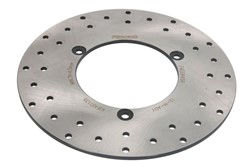
Brake disc FMD0445R Rear fixed FERODO 245/115/5mm/133mm
TRW
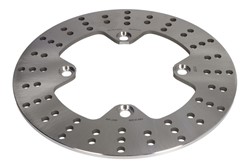
Brake disc MST240 Front fixed TRW 240/105/5mm/125mm
TRW
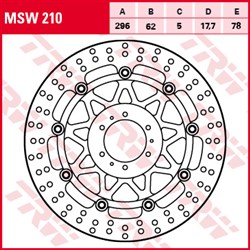
Brake disc MSW210 Front floating TRW 300/62/5mm/78mm
TRW
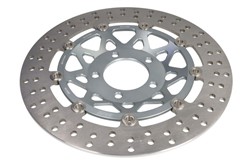
Brake disc MSW220 Front floating TRW 290/64/5mm/86mm
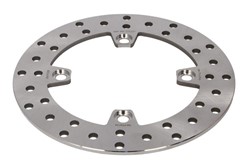
TRW
Brake disc MST245 Rear fixed TRW 220/105/5mm/125mm
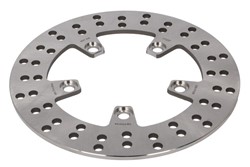
TRW
Brake disc MST246 Rear fixed TRW 220/89/5mm/110mm
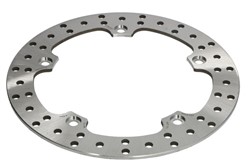
TRW
Brake disc MST331 Rear fixed TRW 276/174/5mm/198mm
Disc brakes – what should you know?
Brakes are responsible for safely slowing a vehicle down, as every driver knows. Their operation allows you to reduce the speed of travel or stop. There are two types of brakes: disc and drum. The latter now appear only sporadically in passenger cars – if they are fitted, they are located at the rear (in newer vehicles). Disc brakes are in the lead, which are much more durable and efficient compared to drum brakes.
The discs are generally attached to the wheel hub, and depending on the type of car, the design of disc brakes may vary. In light vehicles that are not designed to reach high speeds, solid discs made of metal are most often used.
Performance cars, on the other hand, generally have disc brakes equipped with specific grooves or vents. Their task is to better dissipate the heat that occurs during fast and extreme driving. More and more often you can come across a situation where manufacturers provide ventilated discs or discs made of ceramics. Nevertheless, classic steel solutions are still the most popular choice.
Disc brakes work in an uncomplicated way, you can describe their functioning in just a few sentences. When the driver presses the brake pedal, pressure is generated inside the liquid in the brake lines. The pressure of the fluid on the brake cylinders and pistons is responsible for generating the braking force. As a result, the friction linings of the pads are pressed against the rotating brake disc connected to the wheel hub. The result of this chain of events is a decrease in the speed at which the vehicle is moving.
Disc brake – advantages
Hydraulic disc brakes are components that have been chosen by drivers for years. It is also worth noting that their form has hardly changed since they were introduced. Learn about the advantages of disc brakes:
- high performance compared to drum brakes,
- durability, which results in low failure rate,
- resistance to contamination due to centrifugal force,
- Easy to service,
- Durability even during intensive use.
An important part of the braking system is the brake caliper pistons which are located directly in the calipers. The task of these small parts is primarily to transfer the pressure exerted by the fluid to the pads. Brake pistons are also responsible for maintaining the tightness of the liquid in the cylinder and are a guarantee of maintaining the required clearance between the pads and the disc.
The braking process is a complex phenomenon that is worth explaining if you are interested in brake discs. Well, when reducing the speed, the pads stick to the disc with a friction lining. The result of this action is an increase in temperature due to the conversion of kinetic energy into heat. For this reason, brake pads must be made of materials that can cope with extreme temperature environments. Otherwise, they may fail.
Choosing the right pads is extremely important in the context of the correct operation of your vehicle and braking system. For this reason, the optimal choice is to buy branded replacements, including brake system components manufactured by companies supplying parts for the first assembly. Brembo, Bosch, Delphi, TRW, Febi Bilstein, ABE and Ferodo are just a part of our offer.
Bet on quality and choose a proven disc brake
Choosing a brake disc from an established brand will ensure a correctly functioning braking system. To ensure its full efficiency, also check the condition of the master cylinder, brake hoses, brake calipers and brake pedal.
At Inter Cars, we guarantee you durability and a wide range of products that we have prepared for you. We are aware of the importance of brake discs for vehicles, which is why we make every effort to ensure that each of them offers the highest possible quality.
FAQ
What is the role of disc brakes in vehicle safety?
Disc brakes are responsible for reducing the driving speed and stopping the vehicle, ensuring the driver's safety.
What are the types of brake discs used in vehicles?
What are the types of brake discs used in vehicles?